

How is beer and the most famous Irish author James Joyce connected? This is the story of story about why Dublin became one of the world’s great literary cities.
Few cities are so closely tied to their writers as Dublin. James Joyce, Oscar Wilde, W.B. Yeats, Jonathan Swift, Samuel Beckett and Bram Stoker all left their mark on the city—and on world literature. Even if you’ve never made it through Ulysses (and most people haven’t), following Dublin through its writers is one of the best ways to understand Ireland.

The book “Ulysses” by Joyce is mostly known for being unreadable, but it’s so tightly connected with Dublin and so important an artwork, that this alone attracts many travellers to the city. But even if you haven’t read or know anything about Joyce, Jonathan Swift, Oscar Wilde, George Bernard Shaw, Yeats and the others, trailing a city through it’s famous writers will tell you a lot about the identity of a country. If you don’t care about writers, this is where Colin Farell was born…
JOIN A LITERARY TRIP TO DUBLIN
Trinity College
The best place to start a literary trip to Dublin and the most important attraction for me was The Book of Kells and the library in Trinity College. So before you start drinking too much, head for Trinity College.
Founded in 1592, Trinity College is Ireland’s oldest university and one of the country’s most important cultural institutions. Many of Ireland’s greatest writers studied here, including Oscar Wilde, Bram Stoker, Samuel Beckett and James Joyce, making it a pilgrimage site for book lovers as much as for history enthusiasts. This is one of the top sights, but also a key institution for the literary legacy of Ireland.

You can book a guided tour, or just go yourself for 14 euro either way. I like to do things on my own, even though I know I missed out on a lot of info. Expect a lot of visitors.
A small exhibition describes the importance of the book and it’s really good I think. Even if you are not that into books as me. Unfortunately, you can only see the pages on which the book is open. But some pages. And if you visit another time, I think they plip to different pages.

The book of Kells
The Book of Kells is an Irish treasure: it’s a 1200 year old book and the most famous illuminated Bible. The Book of Kells is one of Europe’s greatest medieval manuscripts. Created around AD 800 by Celtic monks, it is famous for its extraordinary illustrations, vivid colours and intricate decoration. Despite Viking raids and more than twelve centuries of history, it survives remarkably well and remains Ireland’s greatest national treasure. That means it’s one of the oldest books in the world!

The long room has 200.000 of the oldest books in a 65 m long beautiful old-book-smelling room. I love it. It reminds me of when I worked in the Royal Cast Collection in Copenhagen… Built early 1700’s, this is one of the coolest and most instagrammable libraries in the world!

Famous students
Many of the famous Irish writers were students here. James Joyce and Oscar Wilde. As Samuel Beckett wrote (the guy with the bridge): “Dublin university contains the cream of Ireland: Rich and thick.” Hmm…
Dublin also gave the world Bram Stoker, creator of Dracula. Although the novel takes place far from Ireland, Stoker studied at Trinity College before working as theatre manager.

In the library, busts are placed on both sides and you’ll find Homer, Plato, Milton, Isaac Newton, Shakespeare and so on. You also find Jonathan Swift of course. And no: no women (except me in the picture above).

Just like Einstein House in Bern, I feel smarter just by being here.
The little Museum of Dublin
If you only have time for one museum besides Trinity College, make it the Little Museum of Dublin. Housed in a beautiful Georgian townhouse overlooking St. Stephen’s Green, it tells the story of Dublin through the people who shaped the city. On the guided tour you’ll meet James Joyce, W.B. Yeats, Oscar Wilde, Samuel Beckett and Jonathan Swift alongside politicians, musicians and ordinary Dubliners.
One of my favourite objects is a first English edition of Joyce’s Ulysses, opened on its final page so visitors can honestly claim they have read the ending. The guides are funny, knowledgeable and make Irish literary history surprisingly accessible—even if you’ve never attempted Ulysses.


‘How many have read “Ulysses”?’, the guide in the Little Museum of Dublin asks. Only 1 says yes. ‘How many have attempted?’ 2 people say yes. There’s good reason for asking this question on a guided tour through the history of Dublin. Oh, and by the way: The 1 person was me!
Take a guided tour. Our guide gave us a tour of women history in Dublin.
Follow Jame Joyce
James Joyce (1882–1941) – Ireland’s most influential modernist writer and author of Ulysses, widely considered one of the greatest novels of the 20th century. Every 16 June Dublin celebrates Bloomsday, when thousands dress in Edwardian clothes and follow the route of Leopold Bloom through the city.
In the footsteps of the famous author of a book almost no one has read, you can explore Dublin’s museums and pubs.

James Joyce Center
One of the original Georgian houses, that were saved belonged to a dance academy, whos owner is depicted in James Joyce’s “Ulysses”. So when it was up for sale, it was bought and turned in to James Joyce Centre. They have great souvenirs – if you like Joyce… If you can visit Dublin on Bloomsday – do it. And take a Ulysses-tour.

The museum is mainly for big fans of James Joyce. It’s not that big a museum, but it tells about Joyce, his works and you can find the actual door from Eccles Street 7. Where Bloom lives in “Ulysses”. I has death mask of the author and as a dark tourist, that is just fascinating. (You can see Napoleon’s in Paris)


Of course, I bought my souvenirs here: a notebook (for travels) with Joyce made by Irelands’ oldest bindery and a totebag. If you haven’t any of his works, start with “The Dead”.

Follow Oscar Wilde
Oscar Wilde (1854–1900) – The brilliant playwright and wit behind The Importance of Being Earnest and The Picture of Dorian Gray, famous for his sharp humour and unforgettable quotes. You gotta love him.
"We Irish are too poetical to be poets; we are a nation of brilliant failures, but we are the greatest talkers since the Greeks."
Oscar Wilde

Merrion Square
Dublin’s most celebrated wit was born just around the corner from Merrion Square. Today his colourful statue lounges opposite his childhood home, looking towards the house where one of Ireland’s greatest writers grew up. It is one of the city’s most photographed literary monuments.
Merrion Square is one of Dublin’s grandest Georgian garden squares. Located on the city’s southside, it is celebrated for its colorful, historic red-brick townhouses, its central public park, and its Sunday open-air art exhibitions on the railings.
On the Merrion Square Pillars, you find another excellent quote:
"We are all in the gutter, but some of us are looking at the stars."
Oscar Wilde

Instagram is overflowing with the beautiful Dublin doors in red, green and blue and with good reason. Dublin was the most beautiful Georgian in the 18th century British Empire. You’ll also see later architecture in the same style, but then it’s technically not Georgian. It’s wannabe…
Follow Jonathan Swift
Jonathan Swift (1667–1745) – Satirist, essayist and Dean of St. Patrick’s Cathedral, best known for Gulliver’s Travels, a biting political satire disguised as an adventure story.
I do think, he’s underestimated: Gullivers’ Travels is way better than you think.
Skt. Patrick's Cathedral

You may have heard of St. Patricks Day. St. Patrick is the patron saint of Ireland and the day is held on his supposed death day. Although, you might think he wouldn’t be to happy about Ireland, since he was from Britain, but captured by Irish pirates. Later he chased all the snakes out of Ireland, which is why you don’t see any…


St. Patrick’s Cathedral is from 1200 and the largest and tallest church in Ireland. I was really looking forward to this, but was kind of dissapointed. It was not that big, not that much too see, Swift’s tomb was inaccesible, it was quite expensive, but worst of all the beautiful Gothic room was aesthetically destroyed by a big gift shop and some decorations in the ceiling. Not good!

Of course, you also find writers here. The garden next to the Cathedral has a literary hall of fame, and Jonathan Swift is buried inside the Cathedral. He’s buried under the floor, but you can see his epitaph, editions of his works, and if you are a big fan: his deathmask and a cast of his skull!

As you can see above, Ireland wasn’t the land of opportunity. Almost all the writers left Dublin. Except for Swift. Maybe that’s why he is so more exposed than his more famous colleagues.
Follow Yeats
W.B. Yeats (1865–1939) – Ireland’s greatest poet and winner of the 1923 Nobel Prize in Literature. A leading figure of the Irish Literary Revival, he co-founded the Abbey Theatre. He is best known for poems such as The Lake Isle of Innisfree, Easter 1916 and The Second Coming.
St. Stephen Greens
Close to the Dublin museum is St. Stephens Green. As you can see further up once again I bumped into James Joyce, but Yeats is also there. The park is not that big, but nice – probably a great spot in summer. There is a W. B. Yeats Memorial near the Fusiliers’ Arch. It’s a popular stop on literary walks and a nice place to pause in the park.
Follow Samuel Beckett
Samuel Beckett (1906–1989) – Nobel Prize-winning playwright and novelist, best known for the absurdist masterpiece Waiting for Godot. I haven’t read him I am afraid to say.
Samuel Beckett Bridge
Another – not so obvious – connection to the writers are the new harbour area Docklands. On a sunny Sunday, this a fine walking tour and nice to see something different architecture than the rest of Dublin.


Finnish in a literary pub
Sláinte!
No literary trip to Dublin is complete without a visit to a proper Irish pub. In fact, James Joyce famously wrote in Ulysses:
"A good puzzle would be to cross Dublin without passing a pub
James Joyce
We tried
We failed.
Pubs have always been more than places to drink. They were meeting places for writers, journalists, politicians and revolutionaries, where ideas were debated over a pint of Guinness or a glass of whiskey. Even today, they remain an essential part of Dublin’s identity. Beer is actually drinkable heritage.
There are more than a 1000 pubs in Dublin. But follow the author James Joyce and the James Joyce Pub Award given in 2000 to the “authentic Irish pubs”. If Joyce say it’s good…

Beer and books
The famous Temple Bar district is lively and colourful, but it can also be crowded and expensive. I walked past the (in)famous Temple Bar area, but it was a little too crowded for me.
I much preferred The Stag’s Head, one of Dublin’s finest Victorian pubs. Hidden just south of Dame Street, it dates back to the late 1800s with stained glass, carved wooden snugs, mosaic floors and an atmosphere that feels almost unchanged. A pub has stood on this site since the eighteenth century.
If you’re following in Joyce’s footsteps, you’ll quickly notice that many pubs from Ulysses still exist. Davy Byrne’s Pub, where Leopold Bloom famously orders a gorgonzola sandwich and a glass of Burgundy, has become a pilgrimage site for Joyce enthusiasts, especially on Bloomsday (16 June), when Dublin celebrates the novel with readings, costumes and literary walks.
Another historic favourite is The Brazen Head, often described as Ireland’s oldest pub. Dating back to the twelfth century, it has welcomed everyone from merchants and travellers to writers and rebels over the centuries.
Alas, I didn’t try them all. Even if you’re not a beer drinker, stepping into one of these historic pubs is part of understanding Dublin. Order a Guinness, listen to the conversations around you and imagine Joyce, Wilde or Yeats doing exactly the same more than a century ago. That’s about as close as you’ll get to the literary soul of the city.
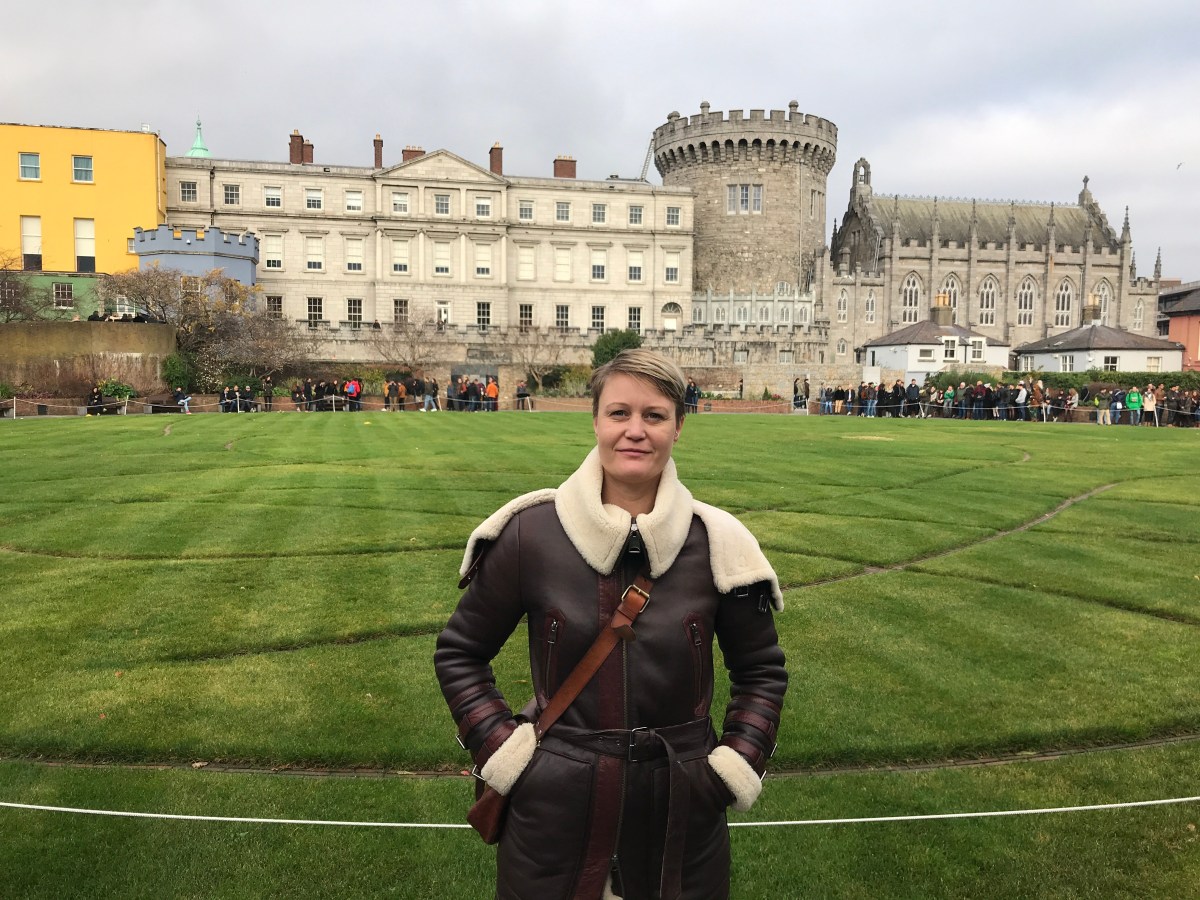
Bonus info: Dublin means Black Pool (really cool) from a pool in the Castle garden behind me here…
does cbd oil help inflammation, myriams hope cbd, what does cbd do to the body, how long does it take for cbd oil to work for joint pain, oil memes usa, cbd oil dab pen, prozac and cbd, quanta cbd pen, guide to cbd oil, maximum dose losartan, king kanine cbd oil, cbd oil for anxiety depression, cbd kansas city, cbd body creams, spruce topical cbd cream, cbd hemp oil gnc, find out about, i want my cbd book, holus cbd, cbd military reddit, tasty drops cbd oil, wikipedia phenolic, best canine cbd oil, is hemp oil healthy, cbd american shaman wichita, normal cbd, 5 leaf marijuana, hemp barn, where to buy cbd oil memphis, 802 hemp oil, definition of extract, healing properties definition, cbd cream pain relief, canna blast cbd, isoforms definition, marijuana definition, who cbd pdf, cbd oil vaporizer starter kit, cbd products at walgreens, sera relief cbd oil reviews, cbd oil benefit, e cloud cbd vape oil, does cbd come up in drug test, just cbd review reddit, neuro hop, cbd oil for, infinite cbd oil, percolator bong,
If you like taking the literary road, try visit Venice, Italy with death as a guide!
Do you use books for travel inspiration?
Related
Discover more from The Travelling Dane
Subscribe to get the latest posts sent to your email.
How nice to read your take on Dublin. You have one up on me in terms of Ulyssses, I have yet to give it a go. For the record some students made it a project a few years back and found a path across Dublin without passing a pub. Fair play but sometimes you would prefer not to know. A pleasure to read
Thanks. It’s always fun to read how others see your city. Thank you for the recommendation of Brother Hubbard. So good. I also heard the solution is to enter every pub on the way!
That’s a much better solution. Although I not sure you would make it across the city alive.
Incredible post! Thank you so much for inspiring me to see more there when I visit next September 2019! ❤️🦋🌀
Thanks. I hope you a great trip. Happy holidays!